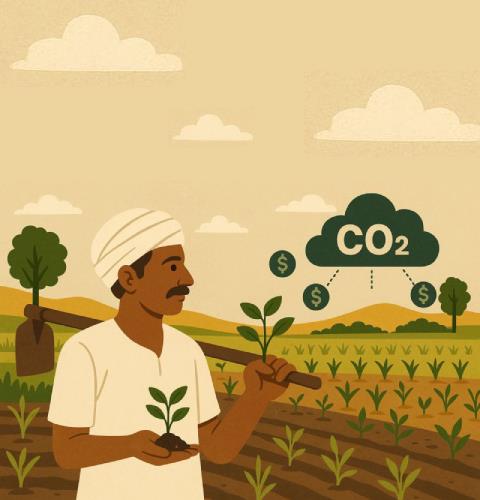
Can Carbon Credits Sow the Seeds of Climate Resilience for Indian Farmers?
In the global race to net zero, carbon credits have emerged as a powerful tool. They have become a way to put a price on emissions and create market-driven incentives for reducing them. In theory, they reward good behavior (carbon negative or carbon neutral practices) and penalize the bad (carbon positive operations). But are we truly leveraging this tool to its fullest potential in India?
Rwanda offers a glimpse of what’s possible. In Rwanda, small farmers are being connected to global carbon markets. The carbon they sequester becomes a tradable asset, generating income while promoting soil health, higher yields, and long-term sustainability.
Why does this model matter for India?
Incentivizing Behavior Change: India has over 100 million farmers, many of whom already practice low-input, organic, or regenerative techniques. Tapping into voluntary carbon markets could turn these practices into monetizable assets, driving climate resilience from the ground up.
Decentralized Climate Action: Rather than waiting for top-down industrial transformation, this bottom-up model activates rural communities as active players in India’s climate goals. It aligns sustainability with livelihoods, not just compliance.
A New Form of Income: For marginal farmers struggling with erratic rainfall and rising input costs, carbon income could act as a form of climate-linked basic income, promoting stewardship over extraction.
But here lies the dilemma: Can carbon credits truly drive systemic change if the global north continues to emit at scale while paying off credits generated in the global south? Are carbon credits a climate solution or just a moral band-aid? Some things to think about..