Can Coal-to-PVC Unlock a Greener Future for a Necessary Evil?
PVC is everywhere – from pipes and window frames to cables, flooring, and packaging. Its affordability, durability, and versatility have made it indispensable to India’s infrastructure and manufacturing sectors. Yet, its production comes at a steep environmental cost. Conventional PVC is made using petroleum-based feedstocks and chlorine, releasing harmful emissions and creating disposal challenges that contribute to long-term pollution.
So, why do we still use it? Because in a country like India, PVC is not just a product – it’s a practical enabler of low-cost urbanization and industrial growth. Phasing it out entirely isn’t currently viable. But rethinking how we produce it might be the more sustainable answer.
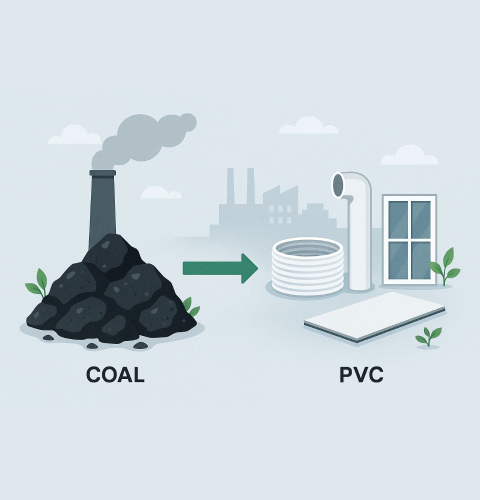
Enter Coal-to-PVC – a technology that could transform this material’s environmental footprint. By using coal-based feedstock (syngas derived from coal gasification) instead of crude oil derivatives, this approach not only reduces reliance on imported petrochemicals but also has the potential to integrate carbon capture and cleaner production pathways. When combined with renewable energy and efficient downstream processes, this could pave the way for what we might call Green PVC.
Why this shift matters?
Feedstock Diversification: India imports over 50% of its PVC needs. Coal-to-PVC offers a local, strategic alternative using abundantly available resources. While coal is often vilified for its emissions, innovations in gasification and purification allow for cleaner extraction of feedstock components essential for PVC.
Environmental Upgrades: When paired with modern emission controls, carbon recycling, and process optimization, coal-to-PVC can significantly reduce the lifecycle emissions of traditional PVC production. This could be an interim solution while fully bio-based alternatives scale up.
Strategic Sovereignty: Reducing PVC import dependence strengthens India’s manufacturing resilience and aligns with Atmanirbhar Bharat goals – but sustainability cannot be compromised in the process.
The Adani Group is taking early strides in this direction with its planned 2million TPA Coal-to-PVC plant in Mundra(As seen through press releases) – the first of its kind in India. With a focus on cleaner coal technologies and downstream integration, this project looks to reimagine how critical materials like PVC can be made more responsibly.
The goal isn’t to glorify coal, but to innovate with what we have and transition our “necessary evils” into more circular, future-fit solutions.