Can Ethanol Blending Reduce India’s Dependence on Imported Fuels?
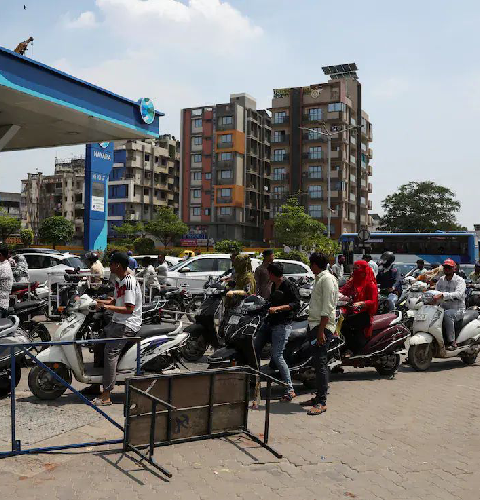
With how LPG prices rose amid tensions around the Strait of Hormuz, and queues forming at petrol pumps, India’s energy vulnerability came back in focus very sharply in the last month. It raises a simple question: are we moving fast enough on alternative fuels?
Ethanol has emerged as one of the most viable near-term solutions. It received a significant push when the government launched the Ethanol Blended Petrol (EBP) Programme, targeting 20% ethanol blending (E20) in the coming years.
But the current situation tells a different story. India currently has an ethanol production capacity of ~20 billion litres, while actual offtake stands at just ~11 billion litres. This gap has left several distilleries operating under stress, with some nearing shutdown due to inconsistent demand and policy uncertainty.
So where’s the disconnect?
• Supply has scaled faster than adoption. Vehicle compatibility and consumer concerns around mileage are still holding things back.
• Policy has been more aggressive on production than on usage.
• Excess supply with limited export flexibility is hurting producer economics.
Ethanol can reduce crude imports, clean up emissions, and support farm incomes—but only if the system works end-to-end.
What can change?
• Support automakers in scaling flex-fuel vehicles through targeted incentives.
• Open up ethanol exports to manage surplus and stabilize pricing.
• Revisit the rollout strategy – starting with E10 as a uniform base may drive wider acceptance without impacting fuel efficiency as much.
India’s ethanol story highlights a broader challenge in energy transition: scaling supply is only half the equation – demand creation must keep pace. The question is no longer whether ethanol can play a role, but whether policy, industry, and consumers can align fast enough to make it viable.