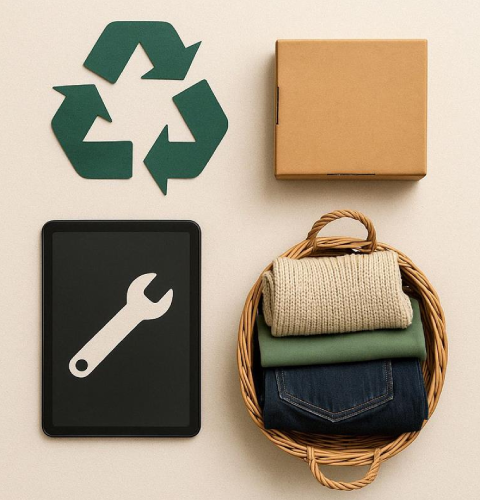
Can Product-as-a-Service Shift us from Ownership to Stewardship?
In today’s world of fast fashion, rapid tech upgrades, and growing demand for convenience, we’re witnessing an unprecedented rise in consumerism. Unfortunately, this comes at a cost; products are increasingly designed for short-term use and quick disposal. As a result, landfills are overflowing, natural resources are being depleted faster than they can regenerate, and recycling systems are struggling to keep pace.
While recycling and circular economy models have gained traction, they often address the problem after the damage is done. A more proactive solution lies in rethinking how we consume – and that’s where Product-as-a-Service (PaaS) steps in. Instead of selling products outright, PaaS offers them on a subscription, lease, or usage-based model. The idea is simple: companies retain ownership, and consumers pay for access or outcomes, not possession. This shift has the potential to reshape our relationship with consumption and significantly reduce the environmental burden.
Why this shift matters?
Lifecycle Responsibility: When companies retain ownership of products, they become responsible for the entire lifecycle; from design and usage to repair, reuse, and eventual recycling. This changes the incentive structure, rather than encouraging frequent replacements, businesses are now motivated to build longer-lasting, easily repairable, and more sustainable products. It also promotes investments in reverse logistics and service networks to maintain products in use for longer.
Consumer Benefits: PaaS meets the modern consumer’s desire for flexibility and access. Instead of being locked into a purchase, consumers can opt for a wider range of products, upgrade frequently, and pay based on usage. It reduces the burden of ownership (repairs, storage, depreciation) and ensures access to the latest innovations in a more environmentally conscious manner.
Ecosystem Optimization: PaaS enables a shift from a linear to a circular value chain. Products can be recalled, refurbished, and reintroduced into the system. Components can be recovered, upgraded, or repurposed – creating a closed-loop model that reduces the need for virgin materials. This also fosters innovation in product design, as businesses now plan for disassembly, modularity, and reuse from the start.
As climate goals become more urgent and regulations around sustainability tighten, PaaS is emerging not just as an innovative model but a necessary one.The shift from ownership to stewardship might be the mindset change that helps us build a truly sustainable future.