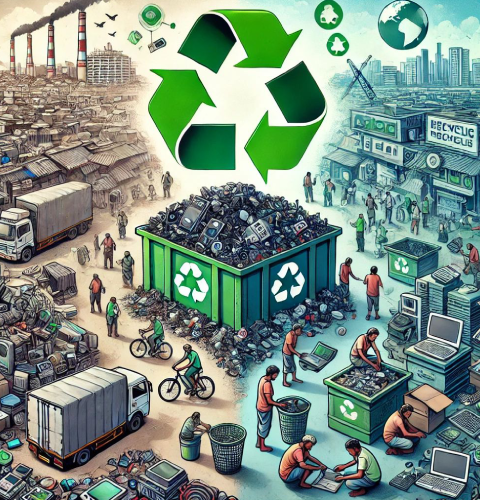
Why is E-Waste Collection Lagging Behind in India?
India is the third-largest producer of e-waste globally, generating over 3.2 million metric tons of e-waste in 2023 alone. However, despite these staggering numbers, the country collects and recycles less than 10% of its total e-waste. With the rapid growth in digitalization and electronics consumption, this gap presents a critical environmental challenge.
How can India bridge this gap?
Some solutions that could help boost e-waste collection according to me:
Formalize Collection Systems: An estimated 90-95% of e-waste is processed by informal dismantlers using unsafe methods that release toxins into the environment.
Encourage New Disposal Habits: Consumers prefer selling old electronics to informal scrap dealers, limiting adoption of formal recycling methods.
Invest in Technology and Infrastructure: With only around 400 formal recycling units, India’s infrastructure for processing e-waste is inadequate, resulting in inefficiencies in recycling.
What is currently being done to address these issues?
Government Initiatives are stepping in to address these challenges:
E-Waste Management Rules 2022: Imposes Extended Producer Responsibility (EPR) on manufacturers to ensure proper collection and recycling.
National Action Plan for E-Waste Management: Focuses on public awareness and promoting innovative recycling solutions.
Swachh Bharat Mission Urban 2.0: Emphasises improved waste segregation and urban recycling systems, including e-waste.
India’s e-waste crisis is a complex problem, but with targeted policies and collective action, we can pave the way for a sustainable future. Government initiatives and behavioral shifts in how we dispose of electronics are essential to reducing our e-waste footprint. Together, let’s harness the power of innovation and policy to clean up our digital future! 🌍🔋